We use anonymous technical and analytical cookies. Info
Light decides where the customer looks, how colours appear and how easy it is to change the display every season.
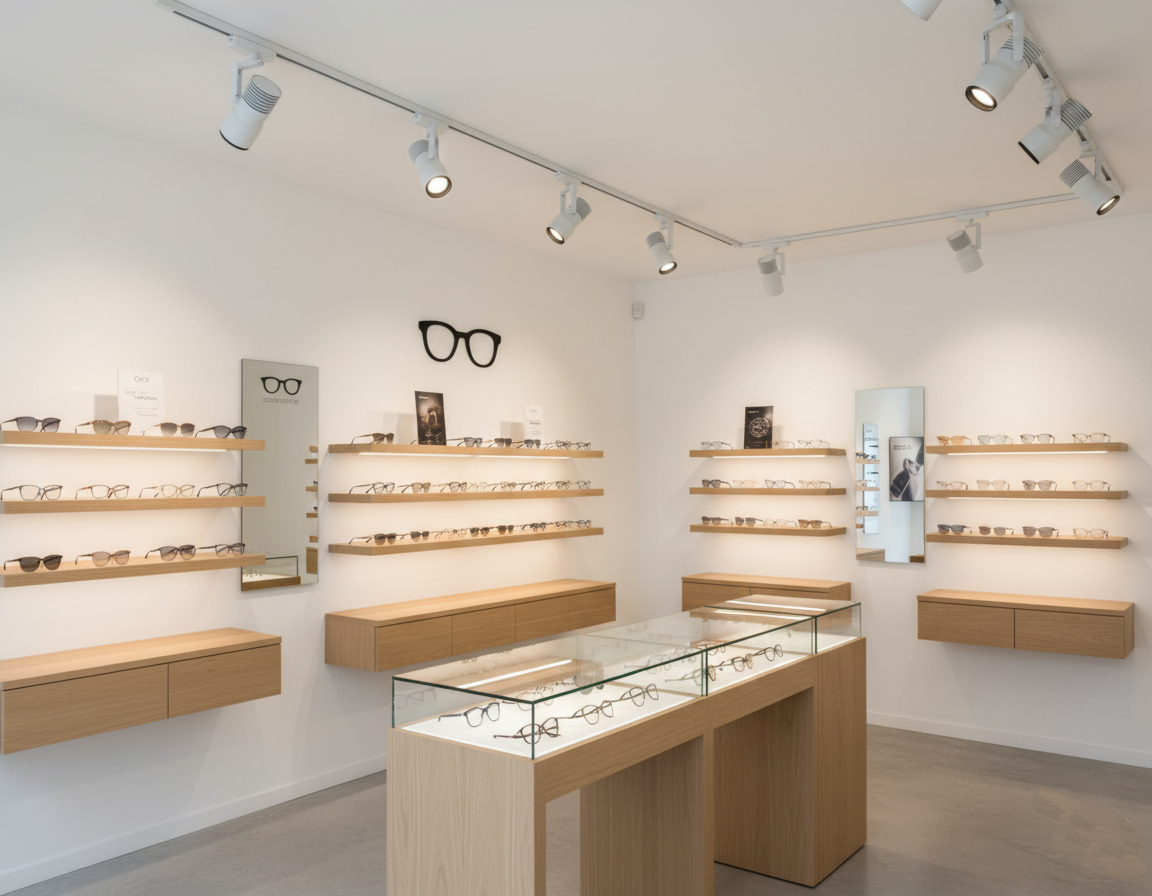
In a shop, light is not just for seeing: it guides the path, brings the right products forward and makes colours look true. This guide sums up the practical rules we use when lighting boutiques, showrooms and fashion, footwear, furniture and eyewear stores.
The most common mistake is lighting everything the same: the shop looks flat and nothing stands out. Hierarchy comes from the contrast between ambient and accent light.
Indicative design values. EN 12464-1 sets 300 lx as the minimum for sales areas and 500 lx for till areas; the other values are design practice, not requirements.
| Area | Illuminance |
|---|---|
| Sales area, ambient | 300–500 lx |
| Till and counter | 500 lx |
| Accents on displays and mannequins | 3–10 times the ambient level |
| Street window, daytime | 2000–5000 lx |
A 3:1 accent-to-ambient ratio is barely noticeable, 5:1 is clear, 10:1 is already theatrical: right for boutiques and unique pieces, too much for an everyday clothing store.
Consistency matters more than the choice itself: two different temperatures in the same view make one of them look wrong. If the shop sells both warm and white garments, use 3000 K throughout and more light on the whites.
A customer who takes a garment home and finds it a different colour does not come back. That is why we recommend CRI ≥ 90 sources with a good R9 (saturated reds), which matter for skin, red fabrics and wood. CRI 90 / R9 →
In fitting rooms, light from above alone casts shadows under the eyes and chin. Front and side light at face height is needed, at 2700–3000 K and with the same CRI as the sales area: customers must see the garment as they will see it outside.
Collections change every season, displays move, windows are redone. With a track, spotlights can be moved and re-aimed without building work. 48 V track is extra-low voltage with slim profiles, so it disappears into the ceiling. Adjustable recessed spots remain the right choice where the ceiling must stay clean or the layout is fixed.
Narrow beams isolate an object, wide beams wash a wall or a shelf. Diameter of the light spot on the floor, calculated from the nominal beam angle (geometry, not a measurement):
| Beam | Typical use | Ø at 2.5 m | Ø at 3 m |
|---|---|---|---|
| ≈ 14° | single object, shoe, bag | 0.6 m | 0.7 m |
| ≈ 25° | mannequin, table | 1.1 m | 1.3 m |
| ≈ 35° | group of garments, niche | 1.6 m | 1.9 m |
| ≈ 55° | wall, shelving | 2.6 m | 3.1 m |
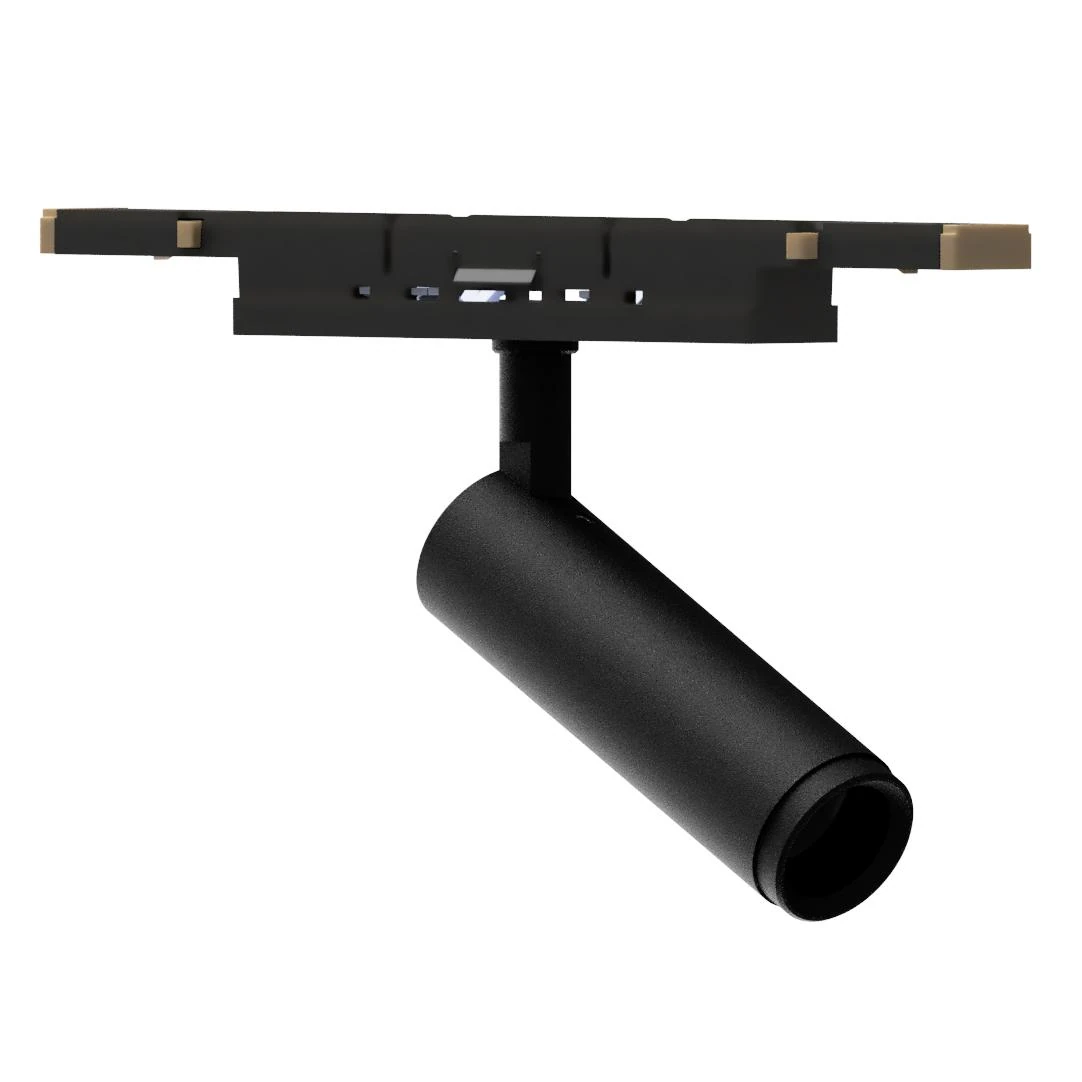
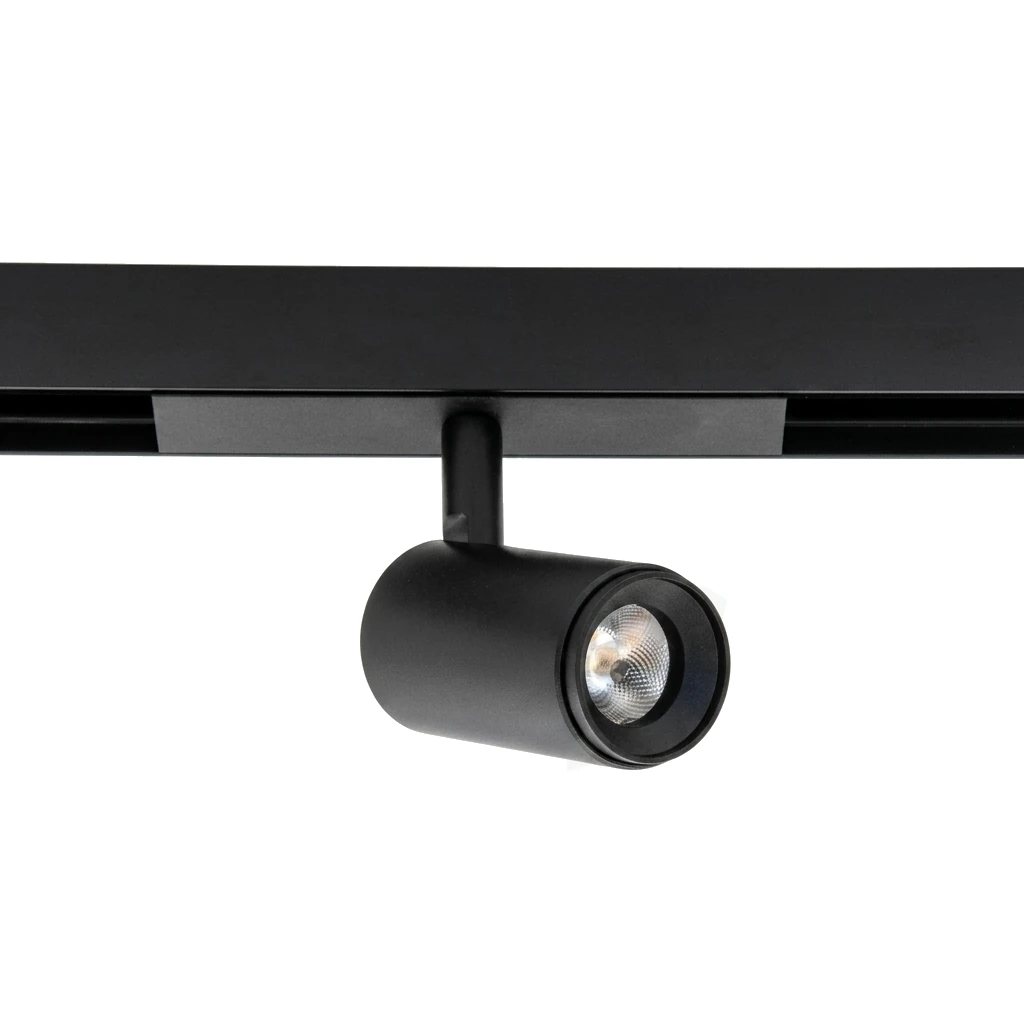
48 V track spotlights, adjustable recessed spots and pendants, all with high colour rendering LEDs.
How many spotlights does a 50 m² shop need?
It depends on ceiling height, layout and target level. As a rough guide, ambient light takes a few wide-beam fittings, and accents are counted display by display: one or two spots per mannequin, one every 1–1.5 m of display wall. Send us a plan and photos and we will give you the exact number.
3000 K or 4000 K for a clothing store?
For fashion and leather goods usually 3000 K, warmer and more welcoming. 4000 K suits sport, technology and white garments. The key is not to mix them in the same space.
What CRI does a shop need?
At least 90, with a good R9, because customers choose by colour. With CRI 80, reds and skin tones look dull.
Is 48 V track safe?
Yes, it is safety extra-low voltage: spotlights are clipped in and moved along the track. The power supply and mains connection are installed by an electrician.
Send us the floor plan or a few photos of the shop and tell us what you sell: we reply with fittings, quantities, track and expected lux.
Request a proposal See indoor products