We use anonymous technical and analytical cookies. Info
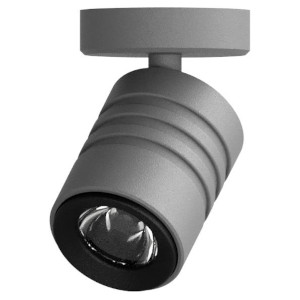
Neutral white makes diamonds and platinum sparkle, warm light gives body to yellow gold. ET4-S MX puts both in one showcase micro spotlight: three 4000 K sources and one 3000 K source with an oval optic.
In a jewellery store the same showcase holds materials that ask for opposite light. It is the oldest problem in displaying precious objects, usually solved by splitting the showcases. ET4-S MX deals with it inside the luminaire.
Diamonds, brilliants, platinum and white gold look their best under neutral white, 4000 K and above: reflections are crisp and the stone looks clear. Yellow gold, rose gold, coral and warm gems (rubies, garnets, amber) look dull under the same light; they want 3000 K.
The classic answer is to split showcases by colour temperature or alternate warm and cool spotlights. It works until the display changes: then the diamond ring ends up in the warm case and the yellow gold necklace in the cool one.
Four LED sources in one body, each with its own lens:
The four sources share the same supply: the warm/neutral ratio is fixed and everything dims together. The body is machined from solid aluminium on CNC in our workshop.
Where the four beams overlap, at the centre, the two lights add up to about 3750 K, a neutral white with a touch of warmth. Away from the centre the result depends on direction, because the oval is wider than the symmetric lenses one way and narrower the other:
| Angle from axis | Along the oval | Across |
|---|---|---|
| 0° | 3750 K | 3750 K |
| 10° | 3710 K | 3835 K |
| 20° | 3610 K | 3890 K |
| 30° | 3500 K | 3870 K |
Along the long axis of the oval the light drifts warm; across it stays neutral. In practice the oval should run along the showcase: the key pieces in the centre get neutral light, the back and long sides the warm component.
A faceted stone does not reflect “light”: it reflects the sources. Each facet, from a given viewpoint, returns the image of a luminous point. A single-source spotlight gives one point; four sources a few millimetres apart give four images, in two different tones.
As the viewer moves, the flashes jump from facet to facet more often and alternate neutral and warm white. That is the sparkle customers call “fire”. For the same reason you need a small, bright source, not a diffuser: diffuse light shows metal well but kills the stone.
Levels in jewellery showcases are high: the display surface often sits between 2000 and 5000 lux, far above the shop floor, so the piece stands out even with the shop lighting on. On-axis values at full output:
| Distance | On-axis lux | Spot (FWHM) |
|---|---|---|
| 30 cm | 11,100 lx | Ø 16 cm |
| 50 cm | 4,000 lx | Ø 26 cm |
| 75 cm | 1,780 lx | Ø 39 cm |
| 100 cm | 1,000 lx | Ø 52 cm |
In jewellery, rendering matters most on reds (rubies, coral, rose gold) and on the skin of the customer trying the piece in the mirror. Ask not only for CRI but also R9, both for the complete luminaire: see the guide on CRI 90 and R9.
| Configuration | 3 × 4000 K symmetric optic + 1 × 3000 K oval optic |
| Optics | symmetric 30°, oval 38 × 18° |
| Luminaire beam angle | 29° |
| Peak intensity | 1,000 cd |
| Luminous flux | 325 lm |
| Power | 2,6 W |
| Supply | 250 mA |
| Colour temperature at centre | ≈ 3750 K |
| Control | one channel, fixed warm/neutral ratio |
| Body | solid aluminium, finishes oro, nero, grigio |
| Files | IES and LDT in the design kit on the product page |
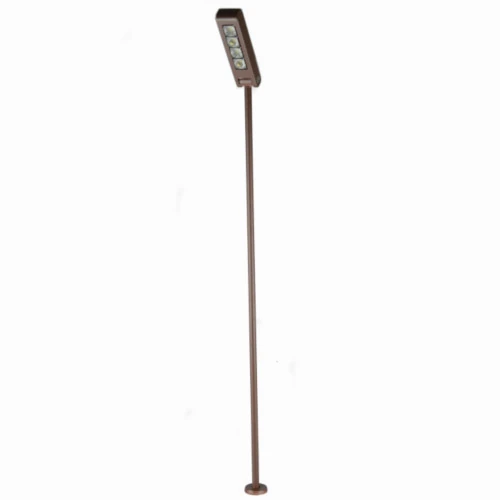
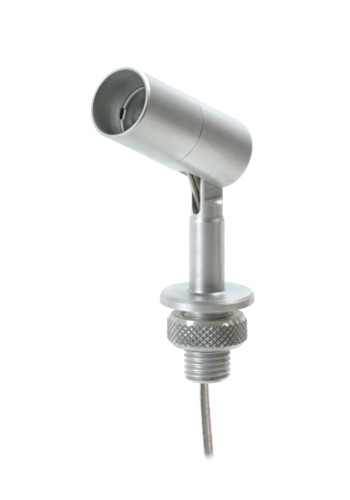
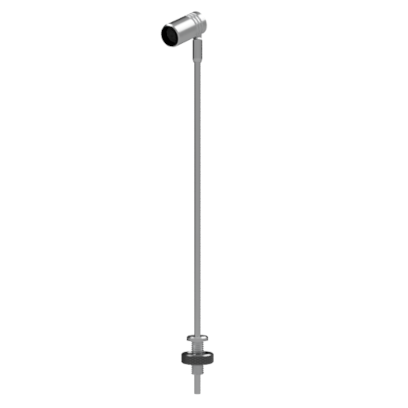
A jewellery showcase is rarely done with one luminaire. These are the ACSE products that work alongside ET4-S MX:


What colour temperature is used for jewellery?
It depends on the materials: 4000 K or more for diamonds, platinum, white gold and silver; 3000 K for yellow gold, rose gold, coral and warm gems. Mixed showcases force a compromise, unless the luminaire carries two colour temperatures, as in ET4-S MX, where about 3750 K reaches the beam centre.
How many lux does a jewellery showcase need?
The display surface often sits between 2000 and 5000 lux, far above the shop floor. Contrast matters too: a 3000 lux showcase in a 1500 lux shop stands out less than a 2000 lux one in a 500 lux shop.
Can the warm/neutral ratio be adjusted?
No: the four sources share the same supply, so the ratio is fixed and only the overall intensity is dimmed. A warmer centre means a different warm source in production; we can evaluate it for specific projects.
Why not a single 3500 K spotlight?
A 3500 K LED gives the same tone everywhere and a single bright point. ET4-S MX gives four points in two tones, which become alternating neutral and warm flashes on the facets, plus a warmer area along the oval. Two different effects: the first is more uniform, the second livelier on stones.
Send us a plan or the showcase dimensions and the materials on display: we reply with luminaires, aiming, lux on the display and IES/LDT files for your project.
ET4-S MX datasheet Request a design