Nous utilisons des cookies techniques et analytiques. Infos
The wrong light does not just spoil the mood: it can spoil the wine. The right light protects it and helps sell it.
In a cellar, light has two opposite jobs: protecting the bottles, which would be better off in the dark, and showing them to the people who buy or taste them. This guide explains what happens to wine under light, which sources to avoid and how we design lighting for storage cellars, wine shops and tasting rooms.
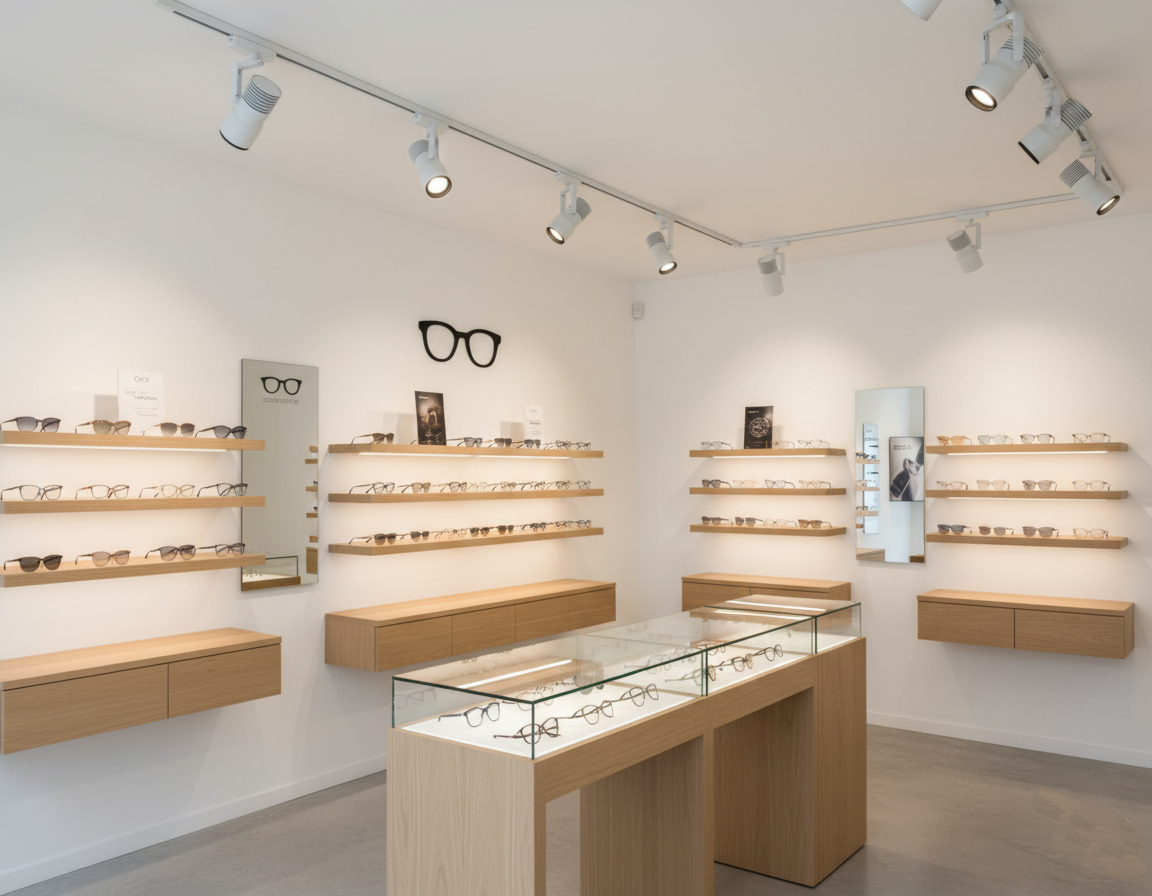
The same fixture can work in both spaces: what changes is how much light, for how long and where it is aimed.
Winemakers call it light-struck taste (goût de lumière in French). Riboflavin, vitamin B2 naturally present in wine, absorbs ultraviolet and blue light, roughly below 450 nm. Once activated, it reacts with methionine, an amino acid in wine, and releases sulphur compounds such as methanethiol and dimethyl disulphide, which smell of cooked cabbage or onion.
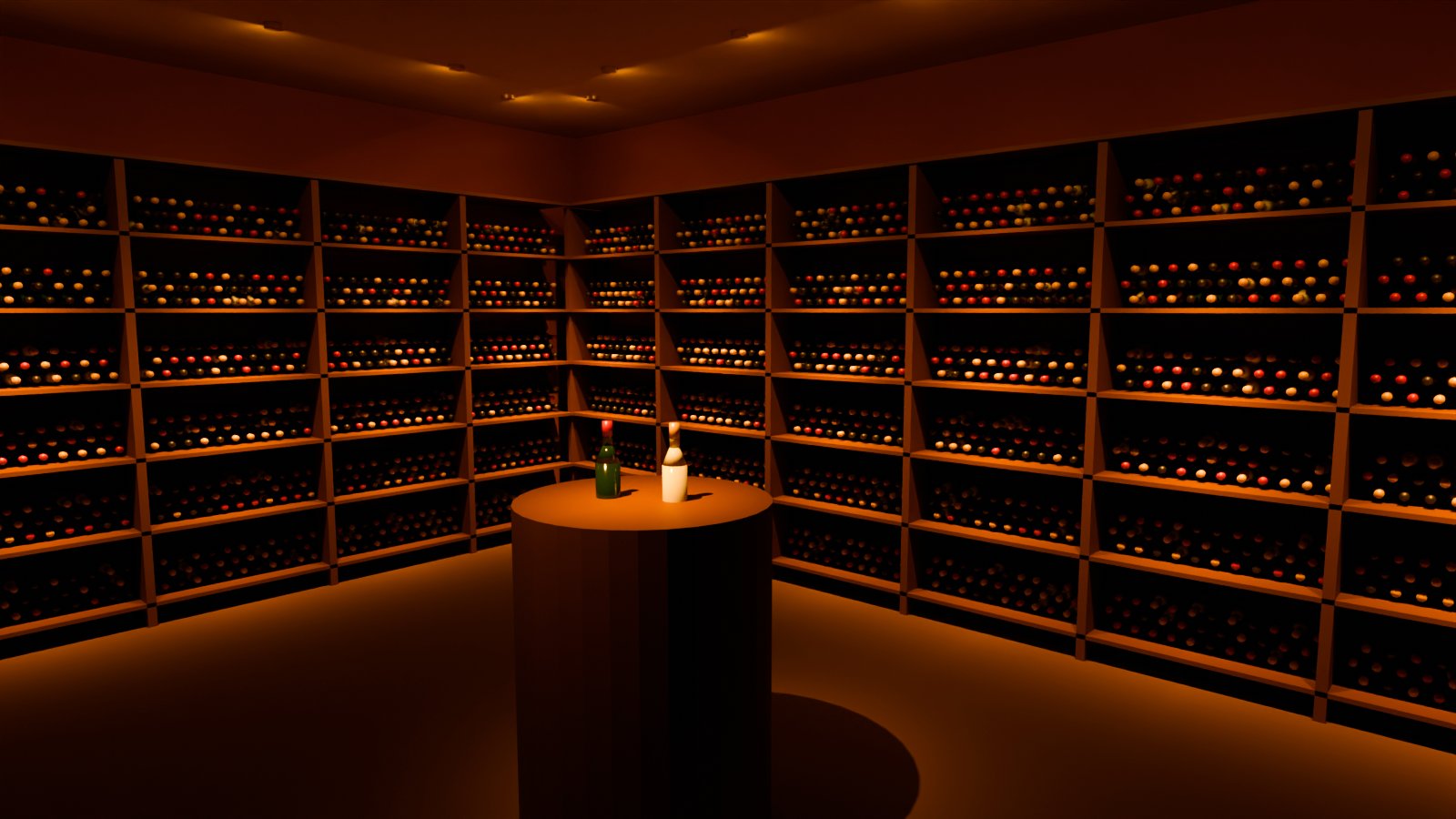
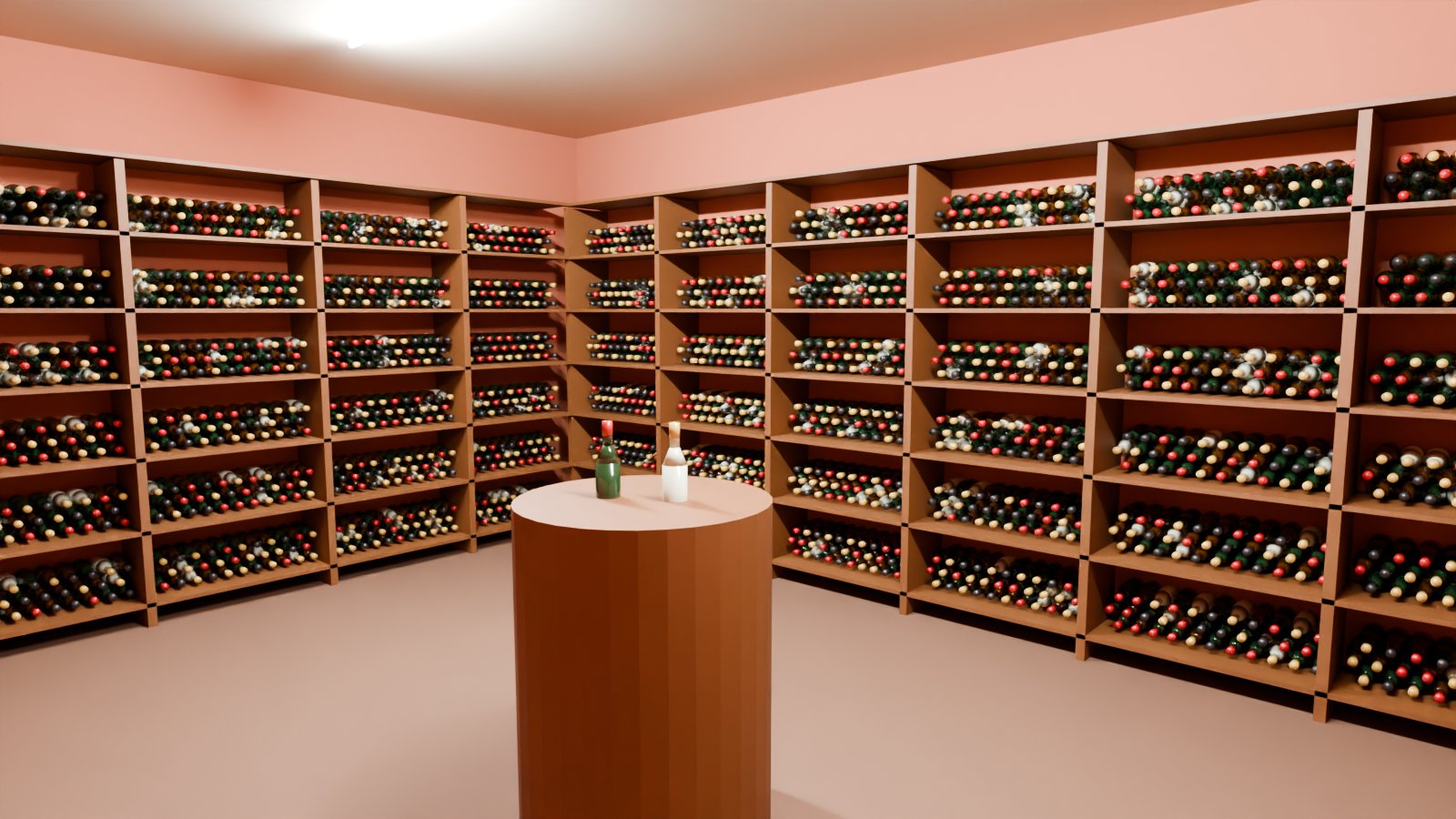
| Source | Near the bottles |
|---|---|
| Direct daylight | Avoid: UV, blue and heat |
| Fluorescent tubes | Avoid: some UV and a lot of blue |
| Halogen and incandescent | Not recommended: little UV, but hot |
| White LED 2700–3000 K | Recommended, at low levels and only when needed |
A good-quality white LED emits no significant UV, but blue is always there: it is what makes it white. So the rule stays the same with LEDs too: 2700 K, little light on the bottles and on only when needed.
There is no specific standard for wine cellars: these are indicative design values. For sales areas EN 12464-1 sets a minimum of 300 lx.
| Area | Illuminance |
|---|---|
| Storage cellar | off; 50–100 lx when someone walks in, with a sensor |
| Wine shop, ambient | 300 lx |
| Shelves and labels, accent | 3–5 times the ambient level |
| Tasting table or counter | 200–300 lx, dimmable |
| Display of fine bottles | on only during opening hours |
In a wine shop it pays to light the labels well and keep ambient light low: labels are easier to read and the bottles receive less light overall. Bottles in a window or on permanent display should be rotated, or kept as display bottles.
Wine wants a cool and above all stable temperature, commonly 10 to 15 °C, and humidity around 60–70% so that corks do not dry out. Lighting must not upset this balance.
At a tasting, light must show the wine as it is: ruby, garnet, straw yellow. That calls for CRI ≥ 90 sources with a good R9 (saturated reds), at 2700–3000 K, with no coloured or RGB light on the table. A white surface or tablecloth helps read the colour when tilting the glass. CRI 90 / R9 →
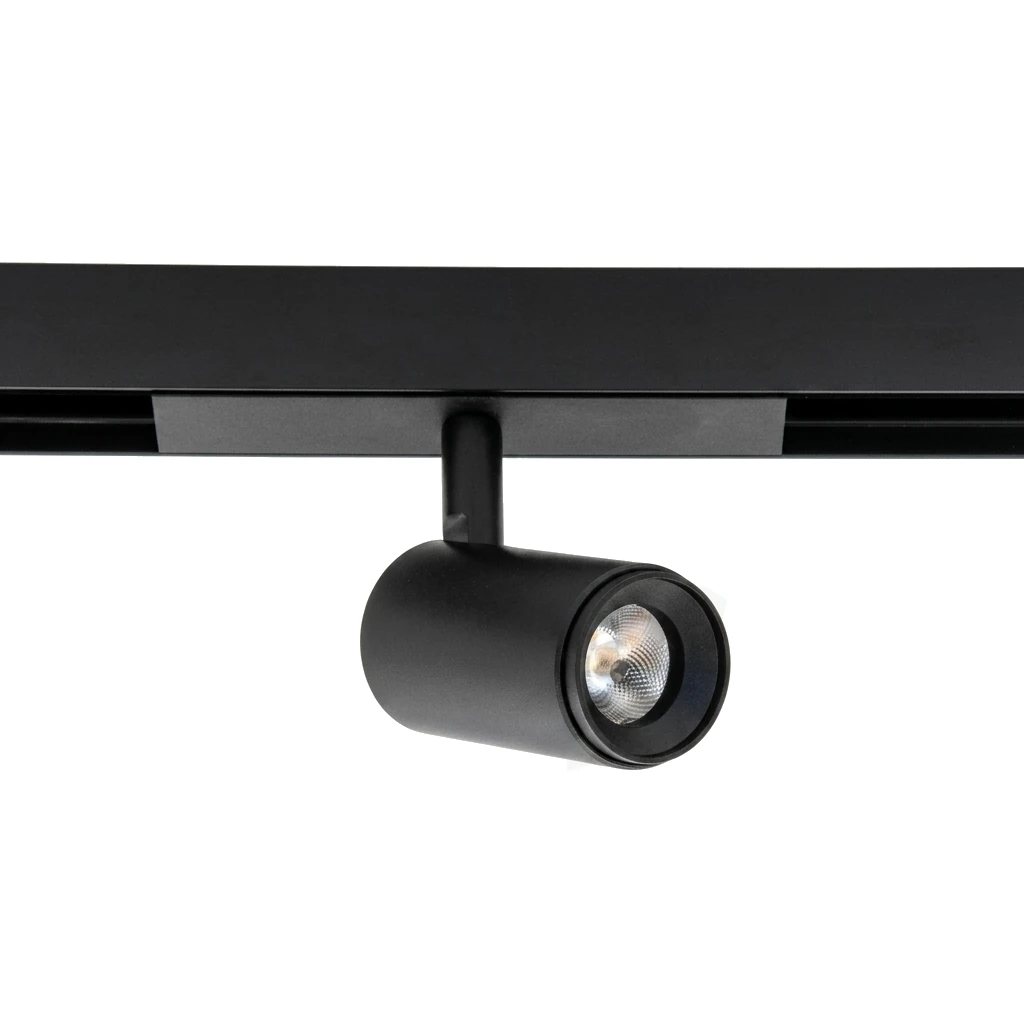
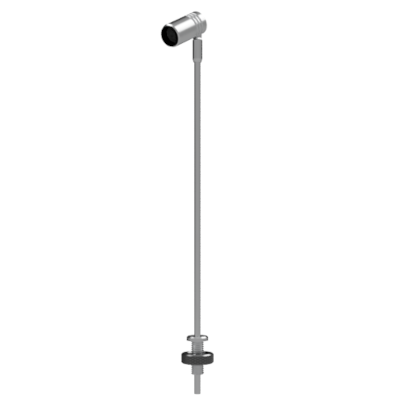
Small adjustable spotlights, for 48 V track or recessed, to put light only where it is needed.

Does LED light damage wine?
Far less than sunlight, fluorescent or halogen, because a good-quality white LED emits no significant UV and little heat in the beam. But it does contain blue light, which is among the wavelengths that trigger light-struck taste. That is why we recommend 2700 K LEDs, low levels and light only when needed.
Do green bottles protect wine from light?
Partly. Clear glass lets almost all the harmful light through, green glass blocks part of it, amber or dark glass protects best. White, rosé and sparkling wines in clear bottles are most at risk.
What colour temperature for a wine cellar?
2700 K, 3000 K at most. Warm light has less blue and brings out wood, brick and labels.
How much light does a wine cellar need?
In a storage cellar the light should stay off and come on only when someone walks in; 50–100 lx is enough. In a wine shop about 300 lx of ambient light with stronger accents on the labels. These are indicative design values.
How long can a bottle stay in a lit display?
There is no single figure: it depends on the wine, the glass and the intensity and spectrum of the light. With clear glass and strong light the fault can appear quickly. Rotate the bottles or use display bottles in the window.
Scientific sources on light-struck taste (PubMed): PMID 34655832 (2022) · PMID 36675899 (2023) · PMID 36512435 (2022)
Send us the plan or a few photos and tell us whether it is a storage cellar, a wine shop or a tasting room: we reply with fixtures, quantities and expected lux.
Ask for a proposal See indoor products